
How to photograph your car for a poster
A poster of your car can only be as accurate as the photo it starts from. The scenery, the road and the sky are all new, but the car itself, its color, wheels, badges and stance, comes from what we can see in your picture.
We looked at every change customers asked for after ordering. The most common were about license plates and lettering (57 requests), paint color (40), body details (36), wheels (26) and badges (13). Most of those trace back to the photo. Here is how to take one that gets it right the first time, and what to do when the only photo you have is an old print.
Free preview before you pay. Nothing prints until you approve it.
§ 01
The angle: side or front three-quarter
The best photo shows the car from the side or from a front three-quarter angle, so we see the nose and one full side at once. Crouch so the camera is at about headlight height. From standing height you get a lot of roof and hood and a squashed-looking car.
Step back and zoom in a little rather than standing close. A phone's wide lens up close makes the nearest part of the car bulge: big grille, tiny tail. Get the whole car in the frame, both bumpers and all of both wheels you can see, with some space around it.
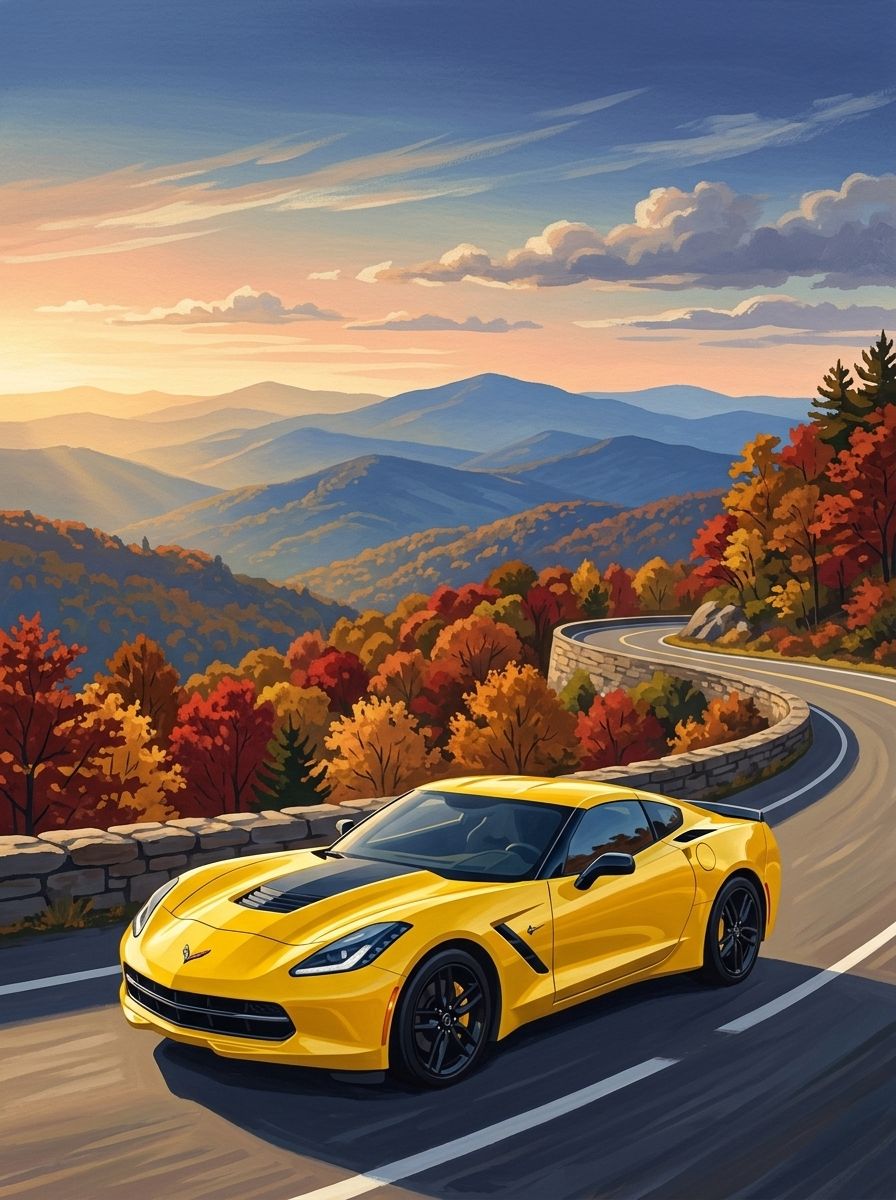
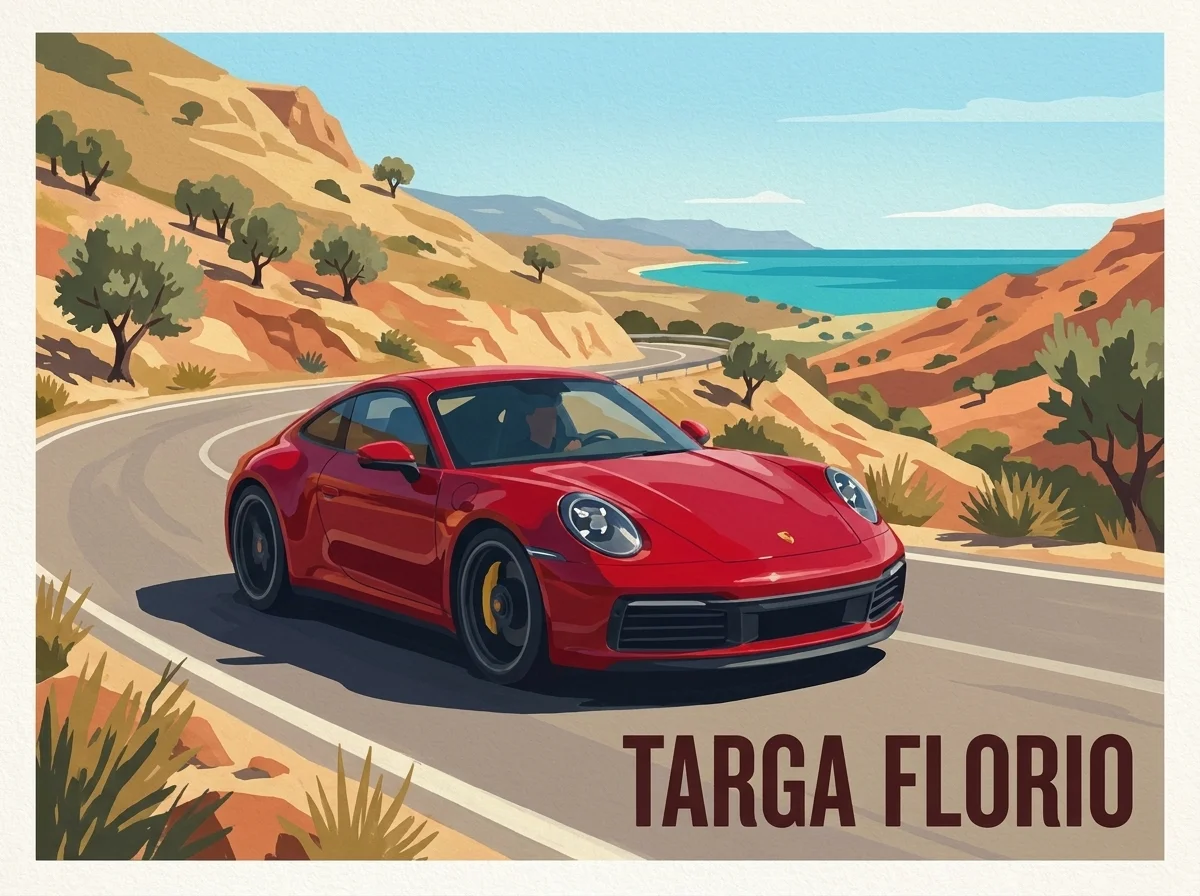
Some cars have their best side at the back. A split-window Corvette, a Porsche with a ducktail or a pickup with a custom bed reads best from the rear three-quarter. That works too. Send the angle that shows what makes the car yours.
§ 02
Light: shade beats sunshine
Paint color is the second most common thing customers ask us to correct. Harsh midday sun washes out light colors and turns dark ones into mirrors. Orange garage lights and yellow streetlights shift the color before we ever see it.
Shoot in daylight, but out of direct sun: an overcast day, open shade beside a building, or the hour before sunset. Avoid strong reflections of trees or buildings across the doors. If the color has a factory name, like Rally Red, Riverside Blue or Grabber Blue, type it in when you upload. A name settles what a photo cannot.
§ 03
Background: it doesn't matter, mostly
We replace the background with the road you choose, so a messy driveway, a gas station or a car show lot is fine. What matters is that nothing covers the car: no person leaning on the fender, no pole in front of the roof, no other car hiding a bumper. Anything in front of the car hides part of its shape.
§ 04
License plates and lettering
Plates and lettering cause more change requests than anything else. Leave the plate on in your photo. Then decide what the poster should show: a clean bumper without a plate or bracket, or a custom plate with text you type in, in a US State, Euro Long or Vintage Black style.
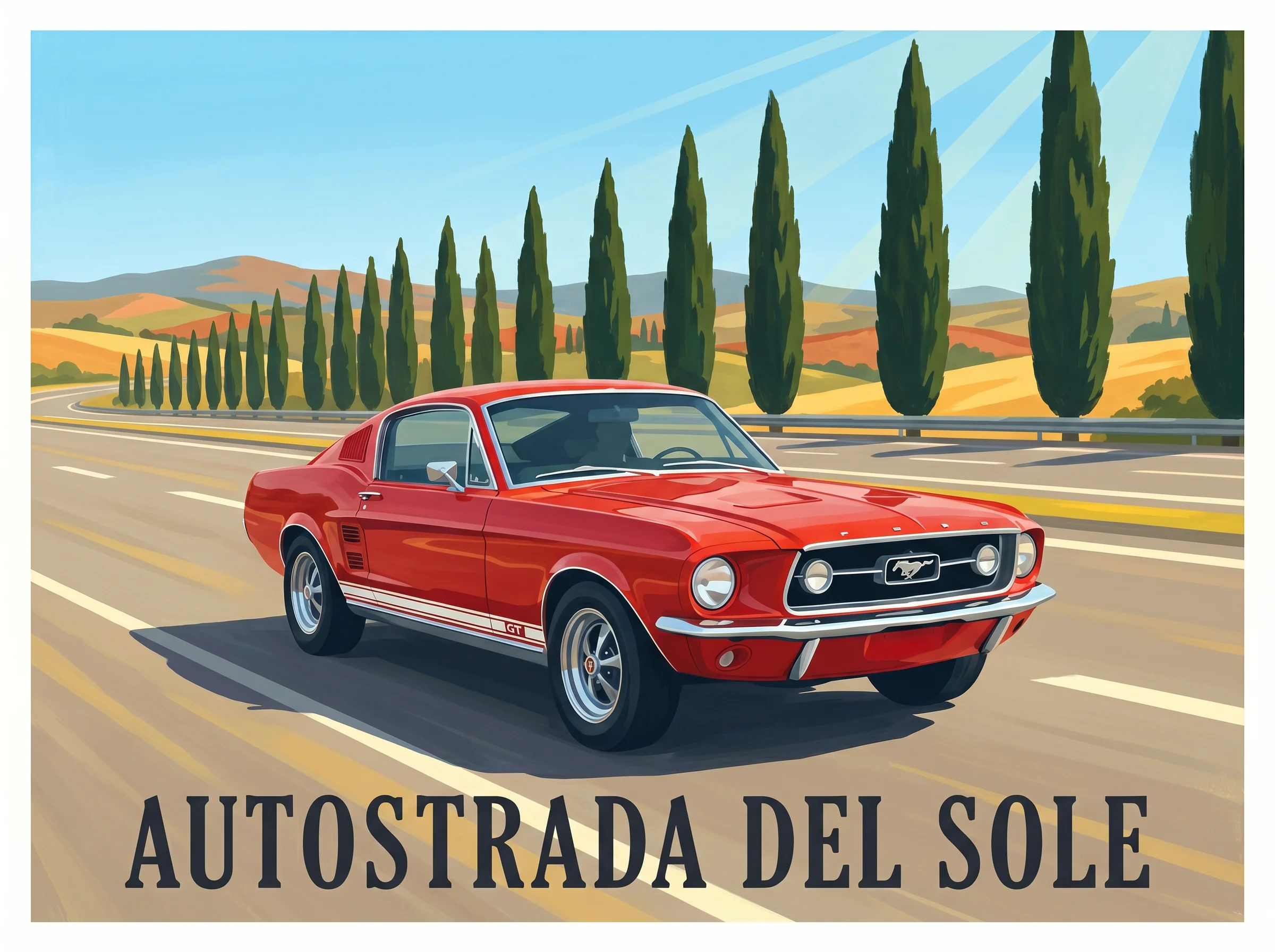
Type the exact text, including the state if it matters. Do the same for any lettering on the car: a door script, a name on the tailgate, a model name on the fender. A phone photo rarely shows small letters sharply enough to copy them, and a typed word cannot be misread.
§ 05
Wheels, badges and body details
Wheels are hard to read in a photo taken from far away or straight from the front. Make sure at least one wheel face is clearly visible. If you can, turn the front wheels slightly so the face of the rim points toward the camera. If the wheels have a name, like Fuchs, Halibrand-style or BBS mesh, write it down.
Badges are small. A fender emblem that says Z06, Custom Deluxe or XLT Lariat is a few pixels wide in most photos, and badges from the wrong year are a common correction. Name the badges you want, and the ones you want left off.
Body details cover everything else: top up or down, single or dual headlights, a hood scoop, side mirrors, a light bar. The most avoidable error is an old photo. If the car has new wheels, a new bumper or different badges since the picture was taken, either take a new photo or say what changed.
§ 06
Old prints and phone scans
Many of our customers order a poster of a car they sold years ago, or of a parent's car that only exists in an album. An old paper photo works. Take it out of the album sleeve, lay it flat in daylight near a window, and photograph it straight from above so the edges are square. Tilt it slightly if the glossy surface catches a glare. Fill the frame with the photo.
Old prints fade, usually toward orange or magenta. If you know the real color, tell us. Look at the background too: if the old photo has a building, sign or date you do not want in the poster, say so when you choose the scene.
§ 07
One photo, then the details in words
You upload one photo of the car. If a detail is not visible in it, describe it in the preview. After you order, you can ask our team for a change and reply with a close-up photo of the detail; they work from it. People can be added too: up to two photos, for a driver and a passenger, where clear faces work best. On a motorcycle the rider and a pillion can join.
No usable photo at all? Describe the car instead: make, model, year and color. Then check the preview closely.
§ 08
Before you order: check the preview like a stranger
The preview is free and includes 5 free edits. After you order, you get the full-size proof and 48 hours to approve it or ask for changes, and changes after ordering are unlimited. A person reviews every print before it ships.
Look at the proof full size and go through the list: plate, lettering, color, wheels, badges, body. That is the order in which our customers most often find something to fix.
The short version: side or front three-quarter, at headlight height. Daylight out of direct sun. The whole car in frame with nothing in front of it. Plate text, lettering and badge names typed in. A current photo, or a note on what has changed since.
From customers
“There are many things that make the race car unique, and I was able to describe them easily in words to create the picture.”
“Looks great love how photo transitioned over. Only wish I had paired more attention to the background there is a tower with 1978 on top and New Hampshire on the bottom looks like it's dating the picture which was actually taken in 1986”
“I made a couple of changes before committing which were executed perfectly. I've got to say, it turned out fantastic!”
Questions
What is the best angle to photograph a car for a poster?
A side or front three-quarter view, taken from about headlight height, with the whole car in the frame and at least one wheel face clearly visible.
Can I use an old photo of a car I no longer own?
Yes. Photograph or scan the print flat in daylight, without glare, and tell us the real color if the print has faded.
Should I remove the license plate before taking the photo?
No. Leave it on. You choose later whether the poster shows a clean bumper or a custom plate with the text you type in.
Does the background of my photo matter?
Not much. We replace it with the road you pick. Just make sure nothing stands in front of the car.
Can I turn my car into a poster with a phone photo?
Yes. A phone photo in daylight is all we need. Upload it and see a free preview within minutes.
Free preview before you pay. Nothing prints until you approve it.